TPU (TPU 1301)
Flexible, wear-resistant and chemically resistant. TPU 1301 is a rubber-like SLS material that combines the elasticity of rubber with the reproducibility of 3D printing. Ideal for dampers, seals, grippers and parts that bend repeatedly without tearing. Shore A 86, 250% elongation at break.
Laatst bijgewerkt: October 2026
What is TPU 1301?
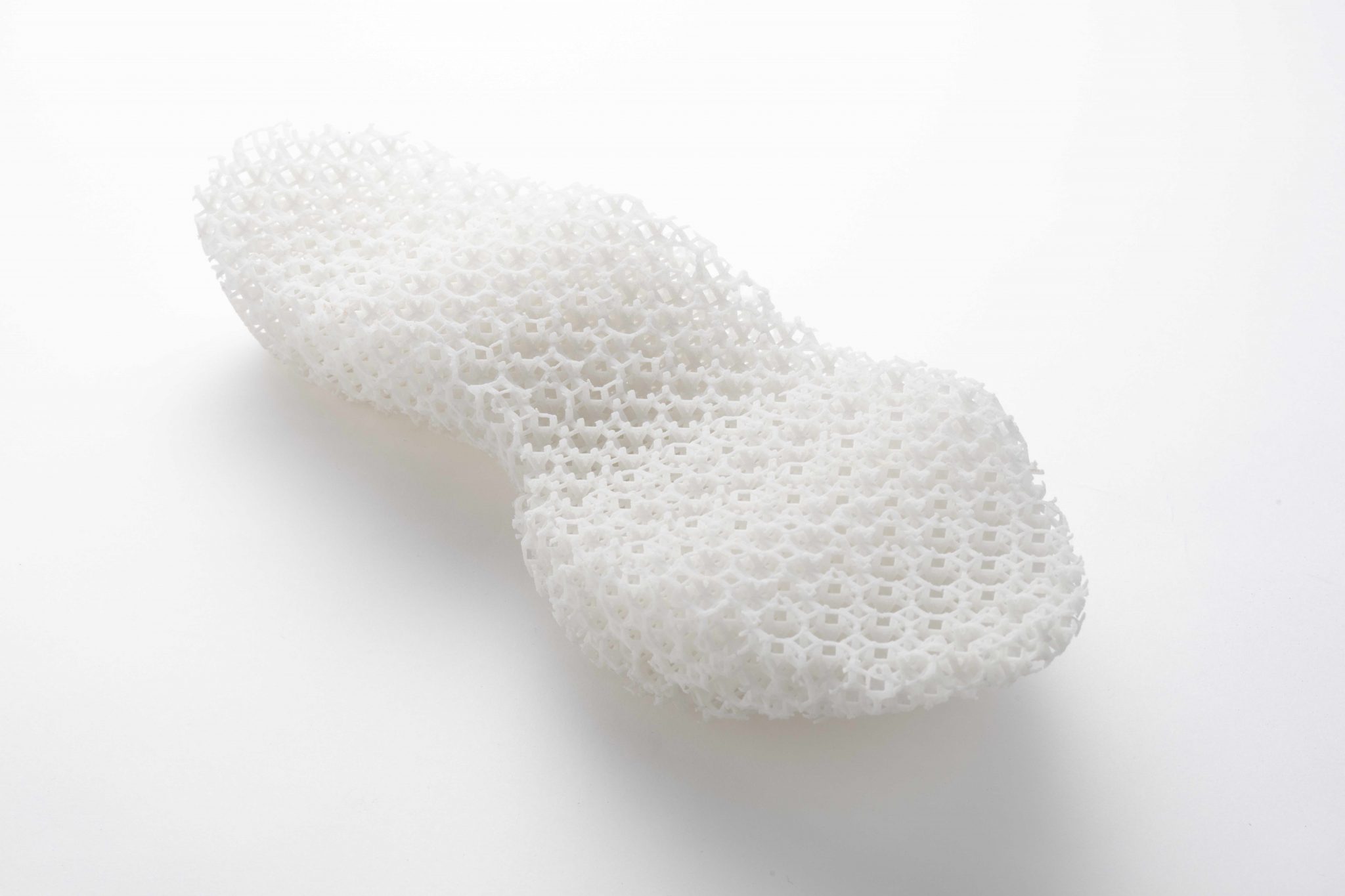
TPU 1301 is a thermoplastic polyurethane processed via SLS into flexible, rubber-like parts. The material combines the elasticity of rubber with the reproducibility and geometric freedom of 3D printing. No molds, no tooling costs, no geometric limitations.
With a Shore hardness of A 86, TPU is firm enough to maintain its shape, yet flexible enough to bend, stretch and compress repeatedly without material fatigue. Wear resistance (DIN ≤ 50 mm³) is comparable to or better than many cast NBR and EPDM rubbers.
Why choose TPU?
Rubber replacement without molds. TPU replaces cast rubber in applications requiring small to medium series, custom designs, or complex geometry. No tooling costs, no startup time, no minimum order quantity.
Triple resistance. Resistant to oil, grease, and coolants. Functional from -20°C to +80°C. Biocompatible per ISO 10993-5 for skin-contact applications.
Isotropic strength. SLS-TPU is virtually pore-free with uniform mechanical properties in all directions, unlike FDM-TPU which has weak Z-layers.
Typical applications
Dampers and bump-stops in machine building and logistics. Thousands of cycles without material fatigue.
Gripper pads and suction cups for robotics and end-of-arm tooling. Custom-fit, immediately deployable.
Seals and product guides in food and packaging industry. Chemically resistant to daily cleaning.
Orthoses, braces, and sport soles with custom cushioning. Biocompatible, comfortable, durable.
Flexible couplings and hoses where traditional rubber cannot achieve the desired geometry.
TPU vs PA12 vs cast rubber
| Property | TPU 1301 | PA12 (PA2200) | Cast rubber |
|---|---|---|---|
| Flexibility | Shore A 86, 250% elong. | Rigid (20% elong.) | Shore A 40-90 |
| Wear resistance | DIN ≤ 50 mm³ | DIN 40-60 mm³ | Variable |
| Mold costs | None | None | €2,000-15,000+ |
| Geometric freedom | Unlimited (SLS) | Unlimited (SLS) | Limited by mold |
| Min. series | 1 part | 1 part | 100-500+ parts |
| Reproducibility | High (digital) | High (digital) | Batch variation |
Bron: EOS/ALM datasheets. Waarden kunnen varieren afhankelijk van bouworiëntatie en procesparameters.
Veelgestelde vragen over TPU (TPU 1301)
Is TPU suitable as a replacement for cast rubber?
Yes, in many applications. TPU offers comparable flexibility to rubber, but is more reproducible, geometrically freer, and more wear-resistant. At low volumes, TPU printing is cheaper because no mold is needed.
What Shore hardness does TPU 1301 have?
TPU 1301 has a Shore hardness of A 86. Firm enough to maintain shape, but flexible enough to repeatedly bend, stretch, and compress. Softer variants in Shore 55, 65, and 76 are available on request.
Is TPU waterproof?
SLS-TPU is virtually pore-free and offers good sealing performance. For fully water- or airtight applications, we recommend post-treatment such as impregnation or coating.
What tolerances are achievable?
Standard tolerance is +/- 0.4 mm or 0.4% (whichever is larger). For critical fits, post-processing can achieve +/- 0.15 mm / 0.2%.
Is TPU biocompatible?
Yes, TPU 1301 meets ISO 10993-5 and is safe for skin contact. Suitable for braces, orthoses, soles, and medical devices.
What is the lead time for TPU?
Standard lead time is 15 business days. Rush delivery within 5 business days is often possible.
Wat klanten zeggen over TPU (TPU 1301)
“Because we design fully custom solutions, 3D printing technology is ideal. Virtually no limitations compared to turning and milling.”
PWR · Robotics
Lees het verhaal →“Making the impossible possible. Complex geometries that are not achievable with traditional techniques, printed in series.”
Engineering
Lees het verhaal →Klaar om te produceren met TPU (TPU 1301)?
Upload je 3D-bestand en ontvang binnen 24 uur een prijsopgave. Ons engineering team controleert elk ontwerp op maakbaarheid.
Why manufacturers choose Parts on Demand
Industrial SLS 3D printing at production scale. 11 machines. 6 engineering-grade materials. One dedicated team.
Production capacity, not prototyping
Our fleet of 3x EOS P500 dual-laser and 7x EOS P396 systems runs 24/7 for series production. That means consistent mechanical properties from batch 1 to batch 1,000. When you need 5 parts or 50,000, the process and quality are identical.
Co-engineering included
Every project is reviewed by our in-house application engineering team before production. We optimize wall thickness, orientation, and geometry for SLS (DfAM), catching issues that would cause rejects. Competitors send your file straight to a printer. We make sure it works first.
6 materials, each with a purpose
PA12 for general-purpose parts (48 MPa tensile strength). PA 950 HD for structural black parts at reduced cost (47 MPa, 80% powder reuse). Carbon LW for metal replacement at 40% less weight. PA802CF for maximum stiffness. PA11 for chemical resistance. TPU for flexible, rubber-like applications.
Based in Utrecht, shipping across Europe
Standard delivery from 5 working days. Express within 48 hours. Upload your STEP, STL, or 3MF file and receive a quote within 24 hours. No tooling costs, no minimum order quantities, no setup fees. Scale from prototype to series whenever you are ready.